

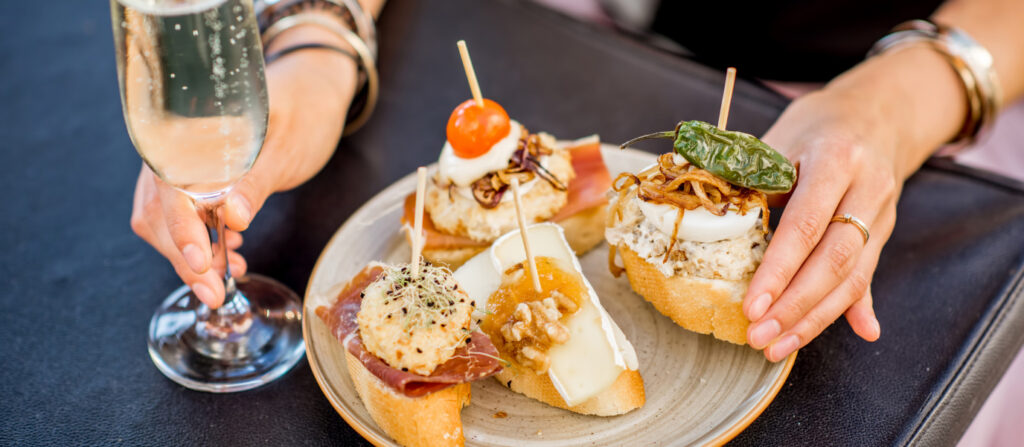
Introduction to Madrid’s Tapas Culture
Madrid, Spain’s vibrant capital, stands as one of Europe’s most exciting culinary destinations. The city’s tapas scene perfectly embodies the Spanish philosophy of savoring life one small plate at a time. Unlike other Spanish regions where tapas might come free with drinks, Madrid’s tapas culture typically involves ordering small plates specifically designed for sharing and sampling. This communal dining style reflects the social heart of Spanish culture, where meals are meant to be lingering affairs filled with conversation and connection.
The word “tapas” comes from the Spanish verb “tapar,” meaning “to cover.” Legend has it that tapas originated when bartenders would place a small plate of food on top of drinks to keep flies away. Today, these small dishes have evolved into an elaborate culinary art form that showcases Spain’s diverse regional flavors.
Essential Madrid Neighborhoods for Tapas Exploration
La Latina
This historic neighborhood, especially along Calle Cava Baja, represents Madrid’s tapas heartland. On Sundays, locals flock here after El Rastro flea market for what’s known as “el aperitivo” – a pre-lunch tapas crawl. The narrow medieval streets are lined with traditional taverns serving classics like patatas bravas and croquetas. For an authentic experience, visit Casa Lucas or Taberna La Concha, where you’ll find yourself shoulder-to-shoulder with madrileños enjoying their weekend ritual.
Malasaña
Once the epicenter of Madrid’s countercultural “Movida” movement in the 1980s, Malasaña has transformed into a hipster haven while maintaining its bohemian spirit. Here, traditional tapas bars stand alongside innovative gastro-bars offering contemporary takes on classic Spanish flavors. Visit Bodega de la Ardosa, a historic establishment dating back to 1892, known for its tortilla española and vermouth on tap. For something more modern, La Musa offers fusion tapas that blend Spanish traditions with international influences.
Salamanca
For upscale tapas experiences, head to Madrid’s elegant Salamanca district. This sophisticated neighborhood houses gourmet markets like Mercado de la Paz and high-end tapas bars where traditional dishes receive luxurious upgrades. Expect to find tapas featuring premium ingredients like Iberian ham, foie gras, and truffles. Cinco Jotas offers some of the finest jamón ibérico in the city, while Ultramarinos Quintín provides a refined tapas experience with an excellent wine selection.
Lavapiés
This multicultural neighborhood offers a fascinating fusion tapas scene where traditional Spanish flavors meet international influences. Once Madrid’s Jewish quarter, Lavapiés is now home to immigrants from across the globe, creating a diverse culinary landscape. Visit Bar Manolo for traditional tapas or explore places like Bendito Cocido, which specializes in cocido madrileño (Madrid-style chickpea stew) served in innovative tapas portions.
Must-Try Traditional Tapas Dishes
Tortilla Española
This iconic Spanish omelet made with potatoes, eggs, and sometimes onions is a staple on any tapas menu. While seemingly simple, the perfect tortilla requires precise technique – it should be golden on the outside and slightly runny in the center. Casa Dani in Mercado de la Paz is renowned for serving one of Madrid’s best tortillas, with locals willing to queue for a slice.
Patatas Bravas
These crispy fried potato cubes topped with spicy tomato sauce and garlic aioli are Madrid’s ultimate comfort food. For an authentic version, visit Las Bravas, where this dish has been perfected since 1933. The secret is in their signature sauce – tangy, slightly spicy, and utterly addictive.
Croquetas
These creamy béchamel fritters come with various fillings – jamón, mushroom, spinach, or seafood – and represent Spanish culinary ingenuity. La Croquetta in Mercado de San Miguel offers innovative varieties, while traditional bars like Casa Labra (operating since 1860) serve classic jamón croquetas that have barely changed in over a century.
Gambas al Ajillo
Sizzling garlic shrimp served in earthenware cazuelas capture the essence of Spanish seafood simplicity. The key is using high-quality olive oil, plenty of garlic, and a touch of chili. El Abuelo, a tiny standing-room-only bar in the Literary Quarter, specializes in this dish, serving it bubbling hot with crusty bread for dipping in the flavorful oil.
Jamón Ibérico
Spain’s prized acorn-fed ham deserves special mention. Visit Museo del Jamón, a chain of ham-focused establishments where legs hang from the ceiling, or splurge at Cinco Jotas for the finest cuts. A plate of thinly sliced jamón paired with Manchego cheese and a glass of tempranillo represents tapas at its most essential.
Modern and Innovative Tapas Experiences
Madrid’s tapas scene isn’t just about tradition – it’s also embracing innovation. Contemporary chefs are reimagining classic flavors with modern techniques and international influences. Visit StreetXO by celebrity chef David Muñoz for avant-garde tapas that blend Spanish ingredients with Asian techniques. For molecular gastronomy-inspired small plates, Dstage offers a tasting menu that deconstructs traditional tapas into surprising new forms.
Mercado de San Miguel, Madrid’s premier food market, showcases this blend of tradition and innovation under one roof. Here, you can sample everything from classic anchovy pintxos to contemporary fusion creations, all while enjoying the market’s vibrant atmosphere.
Tapas and Wine Pairings
No tapas experience is complete without proper wine pairings. Madrid offers excellent opportunities to explore Spanish wines alongside your small plates. Many establishments offer wines by the glass, allowing you to sample different varieties with different dishes.
For seafood tapas, try crisp Albariño from Galicia or Verdejo from Rueda. Meat-based tapas pair beautifully with robust reds like Tempranillo from Rioja or Ribera del Duero. Don’t miss trying sherry with your tapas – this fortified wine from Andalusia comes in various styles from dry Fino (perfect with olives and ham) to sweet Pedro Ximénez (ideal with desserts).
Vinotecas (wine bars) like Lavinia or Angelita Madrid offer expert guidance on wine pairings, often featuring small producer wines not found in supermarkets. Many also offer tapas specifically designed to complement their wine selections.
Guided Tapas Tours
For visitors wanting a curated experience, Madrid offers numerous guided tapas tours. These tours provide cultural context and insider access to establishments that might be intimidating for non-Spanish speakers. Small group tours limited to 12 people create an intimate atmosphere and allow for meaningful interactions with local guides who share stories behind each dish and venue.
Many tours focus on specific neighborhoods or themes – from traditional Madrid taverns to avant-garde gastronomy. Some tours include market visits where you can learn about Spanish ingredients before sampling them in finished dishes. The advantage of these guided experiences is avoiding tourist traps while discovering authentic establishments favored by locals.
Tapas Etiquette and Tips
Timing
Embrace Madrid’s late dining schedule. Most locals don’t eat dinner until 9-10 PM, with tapas often serving as a pre-dinner ritual around 7-8 PM. Many traditional tapas bars are busiest during this “aperitivo” hour.
Ordering
Don’t be intimidated by crowded bars – assertiveness is expected when ordering. In traditional establishments, you may need to ask for the bill when finished, as servers typically won’t bring it automatically.
Payment
Many traditional tapas bars still operate with a system where the server keeps track of your order by writing on the bar with chalk or by memory. Trust the process – it’s been working for centuries. In more modern establishments, you might receive a ticket to present when paying.
Portions
Understand the difference between tapas (small portions), raciones (larger, shareable plates), and media raciones (half portions). If dining with a group, ordering several media raciones to share offers the best variety.
Seasonal Tapas Specialties
Madrid’s tapas offerings change with the seasons, reflecting Spain’s commitment to fresh, seasonal ingredients:
Spring
Look for dishes featuring fresh artichokes, asparagus, and early peas. Many bars offer special tapas featuring these spring vegetables, often simply prepared to highlight their freshness.
Summer
Refreshing cold tapas dominate summer menus. Gazpacho (cold tomato soup), salmorejo (thicker tomato soup topped with ham and egg), and various ensaladillas (mayo-based salads) provide relief from Madrid’s intense summer heat.
Autumn
Fall brings wild mushroom season, with tapas featuring setas (wild mushrooms) sautéed with garlic and parsley. Game meats also appear on autumn menus, often in stews reduced to tapas portions.
Winter
Hearty, warming tapas take center stage in winter. Look for callos a la madrileña (Madrid-style tripe stew), fabada asturiana (bean stew), and various meat-based tapas that provide comfort during the cooler months.
Budget-Friendly Tapas Options
Madrid offers tapas experiences for every budget. For economical options, visit establishments that still honor the tradition of serving a small tapa free with each drink. El Tigre in Chueca is famous for its generous free tapas with modestly priced beers. University areas like those around Complutense University often have student-friendly bars with affordable tapas deals.
Another budget strategy is to visit markets like Mercado Antón Martín or Mercado de San Fernando, where small vendors offer reasonably priced tapas in casual settings. These markets provide excellent value while still delivering authentic flavors.
Conclusion: Creating Your Personal Tapas Route
The beauty of Madrid’s tapas scene lies in its diversity and accessibility. Whether you’re a culinary adventurer seeking avant-garde creations or a traditionalist wanting to experience recipes unchanged for generations, Madrid offers endless possibilities. The ideal tapas experience involves creating your own route through different neighborhoods, sampling specialties at each stop.
Remember that tapas culture is about more than just food – it’s about the social experience, the unhurried enjoyment of flavors, and the connection with Spanish cultural rhythms. Take your time, engage with locals when possible, and embrace the spontaneity that makes Madrid’s tapas scene so special. Your ultimate Madrid tapas tour isn’t just a culinary journey – it’s an immersion into the heart of Spanish social life and cultural identity.
This guide reflects information available as of early 2025. Opening hours, specialties, and even the existence of specific establishments may change, so it’s always worth confirming details before visiting.